Tuition Payments vs. Life Lessons | Lesson 9
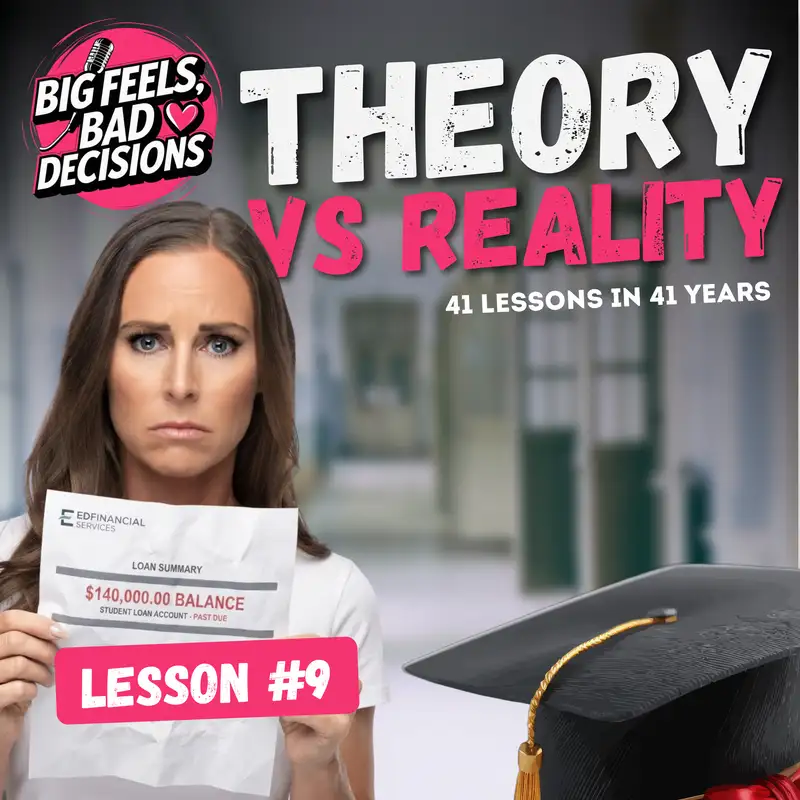
I spent over $140,000 on degrees. I got an executive MBA from Queen's University. I got a Bachelor of Science in Environmental Practice from Royal Roads University. I got a technical diploma in Environmental Sciences from Aurora College. And today I'm going to discuss whether or not I feel like those tuition payments really paid off — or did I learn more at the School of Hard Knocks? I'll let you decide.
(Intro Music)
So, once upon a time, I worked at an art gallery. I was the picture frame manager. It was beautiful. It had all kinds of prints from Pangnirtung and Cape Dorset — the famous northern prints that you see — and a lot of really famous artists. It had soapstone carvings from a ton of really well-known Inuit artists. And I enjoyed that job.
But I started that job right out of high school. High school was pretty hard on me — just school in general. I barely graduated high school, and I couldn't really see myself diving right into college or university. I didn't know what I wanted to be when I grew up. I didn't know what I was doing. I couldn't decide what I wanted to do, so I decided just to work for a while.
So I started picture framing and working at an art gallery right off the bat, and that wasn't really for me. I met a friend of mine who introduced me to serving and bartending, and that experience was really good. That was actually one of the best times of my life — working at the Monkey Tree in Yellowknife. It was such a good group of people. We had so much fun. We worked hard, we partied hard.
And Sunday Funday was literally the best, especially in the summertime. In the north, all the bars are closed on Sundays, so that was our one day off where nobody worked. We would all just get together and do something fun, especially in the summertime. It was always a good time. We had group camping trips. We would go out on a pontoon boat. The owner was just fantastic to the staff.
And I liked bartending and serving. It was good while it lasted. You made really good money. We had amazing regulars — they always took care of us. You could walk out with 200 bucks cash. And generally, if you worked a Saturday day shift, you ended up just staying the rest of the night, or you'd go home, change, come back and join the night crew. So I really enjoyed doing that. I met a lot of really cool people, a lot of really cool regulars that I'm still friends with to this day.
And I was in a relationship at the time. We were drinking one night, staying up late, and I was kind of nagging my partner: "When are we getting married? What's going on? We've been together for a number of years."
And he would always do these stupid little teases. Like, we'd go out for a fancy dinner and he'd tell me, "Oh, you've got something on your face." And I'd try and wipe it off, and I'm like, "Oh my God, what?" He's like, "No, go to the bathroom. Go check it out." So I'd go to the bathroom, look at my face — there's nothing there. I come back and there's a box on my dinner plate. And I'm like, "Oh my God, what is that?" I open it up, and it's a necklace. Beautiful necklace. Like, don't get me wrong, I'm not ungrateful. It was a very kind gesture. But I knew what he was doing. He was trying to bait me into thinking it was an engagement ring, and he had it all set up because he wanted to get my reaction. He wanted to see if I'd be disappointed that it was a necklace. He did that to me twice, okay? I got two necklaces out of it.
But he never proposed. So this one night, I'm kind of nagging him: "When are you going to ask me? What's going on? What are we doing with our relationship?" And he thinks it's a good time to tell me, "Well, I'll never marry a waitress."
Pardon me. Like, he's degrading me, in a sense, because I'm a waitress. As a waitress, I made up to $90,000 plus some. And I had a lot of time off during the day. It was hard work, and you earned every penny that you worked for, but I was doing pretty good. I was making good money. And he's got the nerve to tell me that — and this guy's a drug dealer. Like, "What are you doing with your life? And why am I begging you to marry me?"
But after he said that, it kind of made me a little self-conscious about, "What am I doing with my life? Is being a waitress good enough? It's long hours, it's late nights, it's really hard on your body." And yeah, you can make really good money, but it's hard work. I really couldn't do that for 10, 20 years. I couldn't see myself making a career of it. And after that comment, it kind of just put something in my head, like, "Oh, maybe I do need to do more with my life. Maybe I should look at going to school," whatever.
And because I was in a relationship, I didn't want to go to Calgary or Edmonton or anywhere else where people were going to university. I didn't want to add extra pressure on the relationship. I prioritized the relationship.
So I started looking at different options, different programs I might be interested in. And I kept thinking of my high school teacher who brought the environmental studies program to the high school. I loved it. That was my first intro to what environmental sciences are, what you can do with that type of education, where you could go, where you could work, and the types of opportunities that are out there. I just kept thinking back to what I was taught through that course, and I figured, "Oh, I really want to do something like that."
And there was a program out of Aurora College in Fort Smith, in Wood Buffalo National Park — beautiful area. It was about eight hours away from where I was living at the time, and I figured, "Okay, it's still distant, but at least it's closer, and I could get home on weekends from time to time." So I applied, I got in, I started taking that program, and I loved it.
The program was really geared to the mines. The mines were relatively new, and the program was geared toward preparing you to be a technician, to work in that industry, and to have the skills you would need to enter that field and hit the ground running.
So I took the program — it was a two-year program — and after I graduated, I started on with the government. I had applied to the mines, but in the meantime I needed somewhere to work. So I worked in Environment and Natural Resources with the Government of the Northwest Territories, and I was doing that as an environmental analyst for a little while.
I really wanted to get on with the mines. I applied, and I got an interview, and it was heading toward the next steps, and I thought I was getting on. And this was back in 2008, when the recession hit. So the mine got back to me and said, "You know, we really wanted you for this position, but unfortunately we've had a hiring freeze. We're not allowed to offer any roles right now, but that could change in the near future, so we're going to keep your resume on file."
So I continued to work with the government. I was a little bummed that I didn't get on with the mines, but I kept working away. Then the position came back around, and I applied and got hired and started working up at the mines. And that was about three years — as you know, if you've listened to some of my other episodes.
And I was laid off. That was kind of jarring. That was kind of shocking. It really didn't feel comfortable, that experience. And it made me want to finish my education.
So I did the technical diploma — it was only two years. There was an option to go down to Lethbridge and finish off the degree for the full four years, but because of my relationship, I wanted to stay in the north. I wanted to start working. I wanted to prioritize the relationship. So I did not go down and finish the degree.
And when I was laid off from the mines, that really shocked me. It kind of hit me, like, "I don't feel like I'm competitive in the workforce. I don't have a completed degree. I don't know what I'm going to do. I have all this pressure. I'm laid off, and now I have all these bills. What am I doing?"
But I did get on with another mine — although I was making half of what I was previously making, and I really didn't like that. So I eventually left and went and studied at Vancouver Island University for a year. I was going to pursue a degree in psychology. I was going to figure everything out. I was going to help people. I was going to be an art therapist.
I majored in psychology, I minored in art. I've always been interested in art and painting and drawing, and I did really well in high school — I think I finished all of the art classes by the time I was in grade 10. I took all of them. So it was something I was really passionate about, but I didn't really want to make it into a career.
And I was broke. I was making no money, and I really didn't like it. Going from making over $100K a year to making absolutely nothing, and going into debt, and studying, and working hard, and not really seeing where it was going to take me.
So I thought, "No, you know what? You're already skilled. You're an environmental scientist. You've got the skills, you've got the education. Let's get back into that. Let's continue that career. Continue with what you know."
So I got back on with the mines. And once I started working at Gahcho Kué, I was like, "You know what? I need to be more competitive in the job market. I need a little bit more security, so that if this job doesn't work out I can get hired at other mines based on my experience. And if I up my education, then I'll be more competitive."
So I applied at Royal Roads University to their Bachelor of Science program, to finish off that degree. And while I was taking that degree, it was heavily focused on environmental sciences, but also sustainability — an introduction into sustainability, and how it's integrated into environmental sciences and what that means. I really enjoyed those classes. I had a really great professor.
And funny enough, it was my professor from my sustainability courses who provided the job ad for the environmental management position in the Maldives. So I was able to get that opportunity through that connection, because I took my Bachelor of Science with Royal Roads.
And I just kind of thought of that, and I'm like, "Okay, my path has led me to pursue my education, but this very unique opportunity is something that was so much more valuable than what came out of the tuition alone." I would have never had that opportunity had I not pursued my education, and met my professor, and gone through those classes. So that was a really interesting little reflection, and a really great connection that I had made there.
And then after the Maldives, I came back during COVID and I started working at another mine. I had been interviewing for a role at an operation that is close to where I am right now. It's closer to family, and it was a really good opportunity. I think I was interviewing for four different roles at the time.
The initial position that I applied on was a coordinator role, and I really didn't understand their hierarchy of roles, because they were a major mining corporation — but every operation is a little unique in their titles and their positions and the salaries and everything else. So it was kind of hard, between the positions that I was interviewing for, to figure out, "Okay, where do I place myself?" Like, I have all this experience. I've worked my way up in corporate. I do have a specific pay band that I want to be in.
I was interviewing for a couple of positions. One was a coordinator role, one was a lead position. And so I went with the lead position, and it was a really good opportunity to work up in corporate and be back in mining. I was working remotely — even though I was living in the community where the mine was, I was able to get to my office if I needed to, but it was COVID, so they didn't really want anyone in the office.
And I had finished my degree at the time, and I feel like the degree really helped me get that higher position. My degree and my experience were my negotiating power to be able to land a pay band that was comparable to what I was making at the remote mine sites.
At the remote mine sites, you get bonuses for working remotely. You get paid a higher salary, because you are essentially giving up half your life for the operation, and they provide compensation in that way. When you go to an operation that is closer to amenities and is more of a nine-to-five kind of role, you don't get that site-based allowance or those bonuses as much. But because of my degree and my experience, I was able to negotiate a fairly reasonable salary. So I felt really good about where I was in my career and the level I was operating at.
But I wasn't done. I still saw more for myself. I really loved environmental sciences, but I didn't want to be a specialist, and I didn't want to pursue a PhD. I didn't want to study one thing to death. I didn't want to be an expert in one area — but I did want to grow in my career.
And because I've always been interested in real estate and side hustles and making money with money and investing, I kind of thought about pursuing a degree in business. I knew I wanted to do a master's. I knew I wanted to take the next step in my education.
And I felt like doing an MBA would give me the awareness of business operations. It would just show me all the things that I don't know, and it would help me support the operation as I grew in my career. I didn't want to be a technical specialist — I wanted to be more in leadership, more in management. I wanted to cater to what their stresses were, where their focus was. And I felt like pursuing an MBA would give me that insight into their world and let me support them a little bit more.
And when I was looking at different universities to pursue my MBA, I kind of thought, "You know, I could do an MBA at Simon Fraser. I could go to Calgary. I could go to UBC." So many different schools that I could invest in my education.
But when I really thought about it, I was like, "What else do I want out of my education? Do I just want the MBA to say, 'I have an MBA'? This is my foot in the door, I want a promotion, I want to negotiate the salary because I've got this piece of paper. Or do I want connections?"
And when I reflected on my career, and just where I had landed in life in that moment — I got to where I was because of my connections. Had Mr. Carpenter not brought environmental studies to my high school, I would have never pursued environmental sciences or that profession. Had I not pursued that profession, I wouldn't have got my degree. If I hadn't got my degree, I wouldn't have met my professor, who got me the job in the Maldives. And then I wouldn't have taken the opportunity in the Maldives, and I wouldn't have met the people that I met at the next operation that I landed at — and it wouldn't have brought me closer to my family. So I now live where my family lives, and I hadn't lived near my family in 20 years.
So I just kind of reflected and connected the dots, and realized that my favourite part about everything that I had been doing was the connections that I made and the people that I met. And in pursuing all of my education — the education helped me get my foot in the door, but my connections opened the door for me.
And when I was thinking of a university where I wanted to get my MBA, all I could think about is, "I want to go to the best." And when I thought about who's the best — well, there's Harvard, obviously. There's Stanford, clearly. And then there's Rotman, there's Ivey, there's Queen's.
I wanted something that stood out. I wanted to invest in more than just the MBA alone. And all of these kind of Ivy League professional establishments — I mean, they're not just offering the education. They're offering an advanced education, but also offering connections.
And I knew that they came with a heavy price tag, but I had done well in business, I did really well in real estate, and I thought, "Yeah, it scares me to spend this much money on a degree when I could have a Corvette, or buy a house, or anything else. I'm really investing in this degree. But if I can get into one of these schools, I really want that connection."
And when I thought about where I wanted to apply, Queen's just kept coming to mind. I looked at their web page, I looked at what they were offering, I looked at their delivery model and their structure and how they structure their programs, and what courses they offered, obviously. I really liked what they were teaching. I really liked the courses that they offered — I felt like they were really interesting, and kind of what I wanted to know more about. And their delivery model was really flexible and easy for me to integrate: pursuing that degree as well as maintaining my work schedule.
So I did check in with leadership at the company to see if there was any support that they might offer — if they would give me some extra days so that I could do my classes, or if they wanted to sponsor part of the education with an agreement that I worked for them for X amount of years, whatever the case may be. No. That was a hard no. That was like — I don't even think they read my proposal. I think they just got it and they were like, "Absolutely not. We're not supporting you in any way."
So it was all on me. The tuition, the effort, the days — I had to work extra days so I could have extra days off. When I had to be at residence, I had to use all my holidays. Which was fine. I was going to do it anyway.
I just really kept looking at Queen's, and Queen's was offering connections. And I am glad that I got in. I was elated when I got the email: "Congratulations. You're in. You're in this cohort." I was like, "Holy sh*t. Okay, really cool."
And I had the best cohort. I still think grad class 2025 — it was a really special moment in my life, and I had such a great experience. And I met some of the best people, like, in the world.
You know, when I was looking at other places, I just kept coming back to, "Okay, I can spend $50,000 on tuition and I could get a master's, or I could spend double, essentially, and get these connections that I'll have for life."
And when I went to Queen's, it was so much more than the connections. The education, the curriculum that they were teaching, was top tier. And the model in which you worked, and the way you were forced to work with these individuals — the forming and the storming and all of that, working under pressure, trauma bonding with 63 other classmates — it really brings you together. So many other experiences that I had through that program were just so mind-blowing and special. I got so much more than just the education out of doing this program with Queen's, and I'm really grateful that I had the opportunity to do that.
So when I think back about whether or not the tuition was worth the blood, sweat and tears — I have to say, yes. The tuition was worth it, because without pursuing my education, I would not have made these connections that I have in life. And it's the connections that open doors for you.
And did I learn a lot in life? Absolutely. I feel like universities are where you learn theory. And in life, life teaches you what it actually is. It's not what you think. You could learn theory all day long, but when you actually apply it, you learn that it's very different. Situations and circumstances play out differently. Methods are very different when they're applied. And living a theory is very different than just the theory itself.
So I feel like there's a mix of both, and I think that is necessary. Universities are where you learn the theory, and life is where you practise it. And you can't really have one without the other.
I think it's so important to pursue an education. And I think that the tuition payment matters. Obviously, there's no point in putting yourself in debt to pursue a degree that you're not 100% passionate about, or that you don't really know where it's going to take you.
But if you are in that position where you are in debt and you are currently pursuing a degree, and you're having a moment of, "Whoa, is this worth it? I don't know what I'm getting out of this. I didn't really need to know all of this. When am I ever going to use this?" — don't think too much on what you're learning, necessarily. Consider the people that you're meeting while you're in that experience. Consider the connections that you're making while you're deep in the trenches, and you're probably working full time and studying full time and trying to balance both.
Meet with your classmates. Join those study groups. Join the sports teams that are being offered. Connect with your alumni, and use those connections. Because at the end of the day, that's what you apply in life. It's everything that you've learned, yes — but it's also the people that you've met.
And the lesson that just keeps coming back to me as I reflect on my experiences is: never underestimate the power of connection. Never underestimate the power of meeting someone for the first time.
And this is also kind of a lesson just in kindness. Be kind to people. You never know what they're experiencing, and you never know what part they're going to play in your life in the future. I mean, one lesson we learn is, you know, be nice to everyone because they could be your boss one day. But in reality, be nice because maybe there's someone that's doing exactly what you want to do and you want to ask them questions. Maybe there's someone that knows someone that's going to introduce you to your next opportunity.
Be kind. Give people grace. And never underestimate the power of connections, because you never know where your connections are going to take you.
And looking back — were the degrees worth it? Absolutely. The degrees were worth it. It led to invaluable connections, and it created incredible experiences in my life.
So with that, if you've enjoyed these lessons so far, please feel free to like, share, subscribe and follow along for more.
(Outro Music)