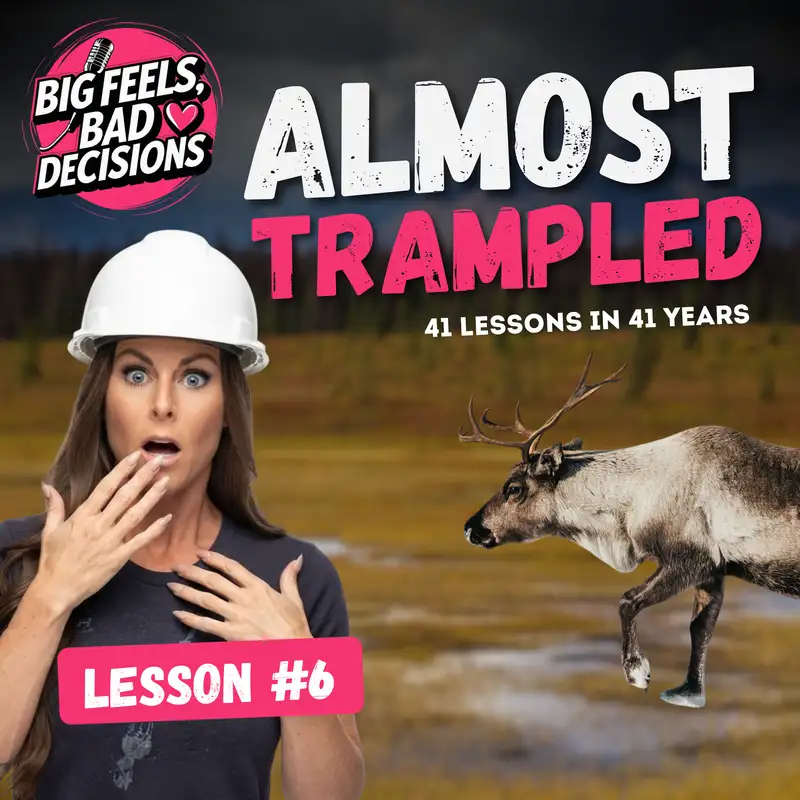
The Brutal Reality of Working at an Arctic Diamond Mine | Lesson 6
Today I'm going to tell you about what life was like as an environmental scientist at the diamond mines in Canada's Arctic. And I'm going to be talking about everything from the shift, the food, the people, all the cool things I got to see while I was there.
I worked at the diamond mines from 2009 until 2019. And my job as an environmental scientist was to make sure that the mine sites were in compliance to the terms and conditions of their licensing. So each mine had a water license and a land use permit in order to operate. And as an environmental scientist, our job was to ensure that the mine site was in compliance to all those terms and conditions within the licensing. And we ran programs to monitor air quality, wildlife, vegetation, aquatic health. Every aspect of the environment basically had a monitoring program attached to it, to ensure that all impacts were either eliminated or mitigated as best we could during operations.
And all of the camps up north are a fly-in, fly-out operation. So essentially that means there's no roads there. You fly in and you fly out. There's one way in and one way out. My shift was a two-in-two. So I worked two weeks on and I had two weeks off. And those were 12-hour days. So I would work 14 days straight, 12-hour days, and then I'd have two weeks off.
And to many people, that sounds like a dream. "Oh my gosh, I only have to work, what, six months out of the year and have six months off." But in reality, a two-in-two shift is not really what you would expect, because you are on site for 14 days, you're working 12-hour days, and that's a lot of effort. And as an environmental scientist, we're out in the field, we are doing a lot of work outside. It's a lot of manual labour to get the equipment operating and prep for field programs and get people organized.
And on your time off, when you come out, you're just catching up on sleep for those first three days home. A lot of people are going out and partying and having a good time, but for me, it was just trying to get caught up on my sleep. And then I get into, you know, home life stuff. You gotta go get groceries, you gotta get stuff for the house, you gotta book all your appointments and get to all the places you're not able to get because you're at a remote mine site and you can't do those things when you're at work. So your life becomes condensed, and everything you do in a month, you end up having to do in two weeks. So it took a lot of planning and a lot of organizing to compartmentalize my life on a two-in-two shift.
But it was great. I really loved the shift. I kind of think it's more of a single person's shift, because if you don't have a partner that has worked in mining or understands the two-in-two shift, it can be really hard on a relationship when you're constantly coming and going. And, you know, these big things that happen in life, people's birthdays and Christmas and holidays, if you're on a shift and you're on a schedule, you're gonna miss a lot of those days. And it was a thing, depending on what rotation you were on at site. Some people miss Christmas every year just because that was the shift they were on. Some people were unlucky enough to miss Christmas and New Year's every year.
But the operations did a good job at trying to balance that. I mean, if you were on a shift where you constantly were missing Christmas and New Year's, you could take holidays and take some time off during that time. Or some people will swap a shift with a cross shift and work out their time. But there are a lot of sacrifices you have to make when you're on a two-in-two shift.
So that was different and unique. And it was really good for me. I leaned into it. I really liked it. It afforded me the ability to do a lot of travel. If you took your two weeks' holiday every year, that ended up giving you six weeks off. So you have your two weeks that you're regularly off on site. And then you take your two weeks that you would normally be in site. And then you have your two weeks off. And generally, if you're on a two-in-two, you have a cross shift who's doing the work for you while you're away. And so if you take your two weeks off and you have a six-week, you're not worried about work. Like nobody's calling you, nobody's texting you. Like you're off. You can take off to another country. You can go travel. You can visit family. You can make plans. Maybe you're doing home renovations, whatever the case may be.
But generally when I had six weeks off, I was working. I would double down and I was bartending and serving as well as working at the mine sometimes. So if I took a six-week, it was generally spent working half of that time just to make some extra income.
And the facilities were always pretty nice at these camps. So I worked at three of the four diamond mines that are up in Northern Canada. And that was Ekati, Diavik and Gahcho Kué. So Diavik was owned by Rio Tinto. Ekati was owned by BHP at the time. They later sold to Dominion Diamonds while I was there. And Gahcho Kué was owned by De Beers.
There was also Snap Lake, which was owned by De Beers. But Snap Lake was unique in that they had a lot of challenges from day one. They were spending so much money managing water and trying to get underground to follow the kimberlite and mine and make revenue. But they ran into so many issues with the water underground that they really weren't anticipating. And I don't think anyone could have anticipated how much that was going to cost at the end of the day, just the amount of dewatering that was needed to get to the kimberlite and to get the diamonds out of the ground. And that operation was operating at a deficit for like seven years before it ever made a revenue. And it really wasn't making any money. So that operation did shut down and go into remediation. I never did make it to that property, but I was at all the other ones.
And all of the facilities were really well done. The food was amazing. Every camp had a really great cook, which I think is necessary. If you are working two-and-two or three-and-three or whatever shift you're on, and you're up in a remote location, and you're working 12-hour days all the way to like 18-hour days, you're going to want to make sure your people are well fed. So all the camps did a really good job at that. We were all really well fed. There was good food. There was a variety of food too, for all kinds of picky eaters. But after working 12-hour days, I was not picky about what I got.
All of the camps had a gym. Diavik had a sauna, which was really nice. I used that quite a bit. And Ekati, I think at one point, had a golf simulator. My dad worked there when it was brand new and just opened. And I remember him telling me that they had a golf simulator. So that was pretty fancy. And by the time Gahcho Kué was up and running, the other mines, Ekati and Diavik, had been around for a number of years. And I think each mine kind of learned from each other.
My GM, I think, at Gahcho Kué refused to get a soft ice cream machine, because it was kind of known throughout the camps that Ekati and Diavik both had soft ice cream machines. And when they would break down, people would riot. People would get really upset that the soft ice cream machines were not working during their shift, or, you know, at the end of the day, they'd come back and want a soft ice cream and it's not working. And I guess there was like an uproar around the soft ice cream machines. So at Gahcho Kué, my GM refused. So we did not have soft ice cream at Gahcho Kué, but we did have a whole section of like cabinets full of baked goods. There was enough good food to be content and be happy at all of these camps.
And the job itself was really rewarding. Like all the things that I got to do and experience as an environmental scientist on site. All of the programs that we ran were there to ensure that the mine was in compliance to the terms and conditions of the licensing.
And one program that we did that I really enjoyed was called the caribou budgets. And the caribou budgets were to monitor the caribou populations that were in and around the area. And the caribou would migrate. And when they were in and around the facilities, we wanted to make sure that the mine operations were not impacting their migration path or deterring them from their natural migration patterns.
So we would use the helicopter. We used helicopters a lot. I'm even sporting the Great Slave Helicopters T-shirt. They gave me a T-shirt. We had helicopters on site every summer season. We rarely used them in the wintertime, but some programs did require helicopters in the winter. But typically during the summer, it was full on for field programs. Like we had tons of consultants on site just to manage the amount of samples and data that we had to collect during the summer season. So we always had helicopters on site. And Great Slave Helicopters was a company that we used quite often. I think we used ACASTA as well. They were really popular. But Great Slave gave me a T-shirt, so I'm gonna wear it.
So yeah, so we would use the helicopter to do these caribou budgets, to find where the herds were and land far enough away that we're not spooking the herds. Caribou are such curious animals, and they're so friendly. They have natural predators like grizzly bears or wolves, but they are so curious about people that I kind of understand why their herds are declining. They're just curious, and they don't really run away from you. They get a little spooked and they'll move, but then they kind of stop when you're far enough away, and eventually they'll just come in and check you out, and they're kind of curious. They're beautiful animals.
And we would take the helicopter and we would land far enough away that, you know, we're not spooking the herd, but close enough that we could get out and walk a little ways and pick a number of animals, maybe one to five, and just monitor their behaviour and their activities for a certain length of time. And doing those was really cool.
One time we were in the helicopter, flying over a herd of about 300, and we were looking for a good place to land, and we saw a pack of 12 wolves up on a hillside. And you could just tell, these wolves were coordinating their attack. They were up on a hill, they were overlooking the herd, and they were just waiting to go down and get lunch. It was cool to see that dynamic playing out, and we kind of hovered. Like, we were far enough away that we weren't disturbing them. They could tell we were there, but we were keeping a safe distance in the sky. And we kind of waited to see if they would, you know, launch their attack while we were there, and we could really get a National Geographic moment. But they didn't go down, they didn't hunt while we were there, but you could see that they were kind of plotting, and it was really neat to see.
And another time when I was doing caribou budgets, we had landed, and I was all set up and a little ways away from the helicopter, and I picked a herd, and I started monitoring their behaviours. And there were about four of these big male caribou that were kind of starting to trot closer to me. And I was like, "Oh, cool, oh, they're getting closer, that's really neat." But they were coming at me a little quickly, and I started to feel a little nervous, because in my head, I'm like, "Okay, I've never heard of a caribou attacking anybody, like, they don't really do that. And I'm pretty far away from the helicopter. I can't really rush back if they were to come and trample me. And all I have is this little air horn. Like, I don't have my bear spray on me. Is that gonna be enough to spook these caribou? I don't know."
And all of a sudden, they just keep coming, and they're rushing, they're coming at me pretty quickly, and they're huge. Like, these are massive, these are clearly the leaders of the pack. And they come right up to me, and they just stop. Like, maybe five feet away. Like, they're very close, and I've got my air horn, and I'm like, "I'm not gonna run, I'm not gonna move, I'm just gonna watch this, but I'm a little nervous. Am I gonna be the first person to get trampled by caribou? I don't know. Maybe."
And I'm watching, and I just look at them, and all they're doing, they come right up to me, and they just look, and they're checking me out, and I'm looking at them, and they're looking at me. Almost like they're circling me, like, they kind of come around, and I'm like, "Okay, they're not really aggressive, but I'm not sure if I'm safe, but I'm just gonna watch." And it was just such a beautiful moment, watching these caribou. And when they were done, they just kind of trotted off.
And when I spoke about it to one of the community members that we had on site, one of the elders that we were working with, I kind of told him about my encounter. And he was like, "Oh, those are the scouts of the herd. Like, every herd will have scouts, and if there's like a threat or something they're curious about, then they go together to check it out." So it was like the four scouts came to look at me, and then they just went on their way, and it was really cool. I didn't get trampled by caribou, but you never know. There's always time for a first.
And another one of the programs that I really enjoyed doing was our wolverine study. And wolverines are filthy little animals, okay? They love the smell of rot, they like stink. Anything stinky and rotty, they love it. They're opportunistic animals. And we would do this in the springtime. We'd set up these massive transects of just wooden posts that were wrapped with barbed wire, and had like a solid base, and we had lure at the top, like nailed to the top with like some felt. And the idea here is, so the wolverines will be lured by the scent and the stink, and they climb up the posts, and they either eat the bait or they smell it. And while they're running up, the barbed wire will grip little hairs. And it doesn't hurt them, it doesn't harm them, it doesn't like poke them. They've got thick fur, thick skin.
So once the posts are deployed, we wait a couple days, and these are very remote regions of the mine site. Like, it's not close to the mine, it's really out kind of in the middle of nowhere on the tundra. And the one year that we were doing this, it is very stinky stuff. Like, you have to wear latex gloves, you basically wear a mask, and whatever you're touching, just make sure you don't get it anywhere on your clothing because you're gonna have to burn your clothing.
So we would go out into the field to start baiting these felt pieces and creating the bait in the bucket for these posts that we were about to go and deploy. And every day after shift, we'd come back to the office and we'd gear down and get ready to go for dinner. And all of the haul truck drivers and the shift crew would be switching out shifts, and they'd be passing our office, like the environment office. And this beaver castor did resemble the smell of marijuana a little bit. Like, it was real stinky, it was skunky smelling. And so you would hear comments all the time, "Oh, environment, at it again." Like, we were the potheads of site, like, we were the hippies. So when they smelt the beaver castor, they just thought, like, we're smoking pot in the back. Not the case. Like, site had a very strict policy on drug use, like, you don't do it. And absolutely nowhere on site is it tolerated. But it was funny, it was a funny little joke.
And we collect all the hairs from the wolverine, and we send the hairs to a DNA lab in the south. And this analysis tells us what the wolverine population is like in and around site. Like, is there an abundance of different wolverines? Are there wolverines that are being attracted by the mine site? Are we pushing wolverines away from the mine site? Like, is the population sparse? Is it abundant? Are there returning wolverines? What is their radius? What is their territory? Is it the same wolverine coming? So we really just, we take the samples, we send it in, we kind of give it to a lab to analyze and then keep that data for future records to monitor those populations.
And we were deploying these posts, and I came up over a ridge, and right in front of me was this huge grey wolf. I was nervous. I wasn't really sure what to do because I have a whole toboggan filled with these posts that are very heavy, and I'm on a sled, so like, I could get out of there, but this toboggan is gonna slow me right down, and that wolf will get me if he wants to. In my head, I'm like, well, thank God it's only one, but I mean, where there's one, there's gonna be more. And we just kind of had this like stare down. In my head, I was like, please don't eat me. And the person, because you always work in pairs, there's always somebody that you're working with when you're doing these field programs. So the person I was working with kind of came up on his sled behind me, and I kind of like stopped him. I was like, what do we do? And he was like, oh, he's like, well, just stay still, and watch him, and see if he comes closer or moves on. And eventually, he just moved on. He didn't really care about us. But it was kind of a nervous moment, you know?
And because it's springtime when we're deploying the wolverine posts, we come across a lot of grizzly tracks. And that was a little unnerving, because if a grizzly wanted to get you, and we're on a sled, like they could, again, we have these toboggans full of posts, and if we're getting chased by a bear, the odds aren't really in our favour. So that was a little nerve-wracking. We did always carry bear spray and deterrence with us. And if it was in an area where we were seeing a lot of grizzly tracks, we would bring the gun with us, just as kind of a last resort. So we always had two guns on site. One was for rubber bullets and deterrence, and the other one was the shotgun, if we were in a situation where a grizzly was coming for a team member or something. And we were trained on how to use it and everything, and everybody was comfortable with that.
So I really liked those programs. We also did a grizzly DNA program, very similar to the wolverine program, where the posts were different, because they were designed so that a grizzly would rub against them, and we would be able to collect their hair samples from them rubbing on these posts. And we wanted to monitor the grizzly populations around site.
The one site, Diavik, that I worked at, it's an island. So when we have grizzly bears come on site, it is a little difficult getting them off site because they naturally just want to kind of go around in a circle and stay on land, which isn't good for the operations because it's dangerous for the bear and it's dangerous for the people on the ground working outside. And so our job as environmental technicians or officers, we would have to keep the bears out of the operation. If anybody saw a bear on site, they were directed to call Environment, which is our team, and then one of us would have to go and push the bear off site, or just like keep it away, outside of the active operations area.
And at Diavik, we had a big bear problem. They really liked to be on the island. And to be fair, there's a lot of brush and low-bush berries all around the operations. So it's not that they're coming in because they want to get into the garbage and the garbage bears. There's a lot of natural vegetation that they were attracted to in and around the area. But it was our job to keep them away from site.
And I had bear calls kind of throughout the summer. It was constant. I was always dealing with the grizzly bears. And it was all grizzly bears at site. There weren't really any black bears because it is the tundra. It's beyond the tree line. There's no trees, so black bears don't hang out up there. But these grizzlies are a little bit smaller than what you would probably find in Alaska, where there's salmon and really good fat resources. Up on the tundra, it's just berries. They're eating whatever rodents or carrion that they can get. If they're lucky to get a caribou, they would. But generally, it's the low-bush berries that they're eating. So they're not as big. Some of the males get pretty big, but generally, our site seemed to attract a lot of females and their cubs. So I got to see a lot of mama bears and their cubs.
And it was a bit of Russian roulette who got to be on bear call. And bear call was something I hated. And I think we all hated it because we had so many bears on site during the summer season. And essentially, if you were on bear call, you were given the keys to the gun cabinet. And you would be woken up at two in the morning, three in the morning, all hours of the night, to go out and deal with bears that have wandered into site.
And it happened quite often because there's less activity on the mine site at night. It's still operating, because the mines are operating 24 hours a day, seven days a week. But things do start quieting down at night. So the bears get more comfortable creeping closer into the operation and snooping around a little bit. So if a bear was found on site or in and around the operation, then the person with the keys to the gun cabinet would be called in their room and woken up. And you had to get up, get out, get the gun, get the deterrence, like bear bangers that we would use, and go push the bear off site. And there were general areas that we would target to move the bears, just so that they're away from the active operation. And we can kind of monitor them from there.
And so that's what you would do. But if you were on bear call, you might be woken up at two in the morning, you go, you move a bear, it takes you an hour, maybe an hour and a half, depending on how motivated they are to get back out onto the tundra and where you can get your vehicle to fire the bangers to kind of direct them. You could be out there for a couple hours, but you were always expected to show up at the toolbox meeting at 6am. And you were expected to work your full 12-hour shift. So six to six is what we worked. And even if you were called out at night at two in the morning and you were out for two hours to get a bear out of the area, you still had to be at the toolbox at six.
And there was kind of a mention of, like, oh, if you're really tired, like, take some time. But if you took some time, you were kind of shunned. Like, nobody wanted you to take some time. You were expected to be there at six. So we were always there, even if we were on a bear call, and we would do our full shift. You would get some overtime for that, but overtime doesn't mean a lot when people are exhausted, to be honest.
So I hated bear call, and we would switch it off. So one week, I'd be on bear call. The next week, it would be the next person. So it is switched up a little bit. But because we had so many bears on site, it happened often.
And it was interesting, because if a mom and her cubs were on site, often it would attract a big old male grizzly. And the dynamic would be, if the grizzly was over here on site, the mama and her two cubs would be down here. And then suddenly the male would move, kind of chasing the sow and her cubs, and the sow and the cubs would go over here. And it would just be constantly trying to get these bears off site.
And if it really came down to an issue, like if they were getting habituated or getting a little too comfortable in the area, we did have a helicopter. We used it sparingly, because we don't want bears to get habituated to the helicopter, but we would use it to move them off the island and get them swimming a little bit to the other side, to the mainland. And that's when, if you could get them over there, they generally stayed off the island for a few shifts.
But we did have this one sow and her cubs that would not leave the island. It started being a problem because they actually got into the pit, and we were chasing them down active haul roads, which is really dangerous. It's dangerous for the haul truck drivers. It's dangerous for us. I remember being on the radio, shutting down the haul roads, which cost the operation a lot of money. If they're not hauling, money's not going through the process plant. So that's a big deal, when these bears started to affect operations.
So we called in a biologist to put the bears to sleep and long-line them 60 kilometres off site, hoping that that experience would be a little bit traumatic, to keep them from coming back to site. So we worked with them. We saw how they loaded the tranquilizers. It was a really cool experience. It was really interesting. The biologist was in the helicopter and everything had to be timed just so. You have to tranquilize each one in order and then get the helicopter down, get these bears in nets. And while they're down, I mean, the science part of it all is, well, let's get some documentation. Let's understand who these bears are. Let's get some DNA. Let's measure the teeth. And as we're looking at the paws, the cubs, their paws were just berry-stained, like just covered in berries. And it was really cool to be that close to a grizzly bear. And all I could think of is, this bear's gonna wake up any minute and tear my head off. So let's get them in the nets. Let's go, guys.
So we got them in nets and, all in one long line, the helicopter had this sow and her baby cubs all in a line, and took them about 60 kilometres north of site on the mainland, dropped them off, got them all out safely before they woke up. And we were hoping that would be a deterrent enough for them to not come back to site. But no, they returned. They did end up coming back to site, but we did get them, pushed them off site again.
But yeah, bears were a problem at that site. And then when I moved on to Ekati and then later Gahcho Kué, bears were not really an issue, not like Diavik. And I don't know, maybe Diavik just had some really good berries. I don't know what it was. But yeah, I just remember, when I wasn't working at Diavik anymore, all I could think of is, thank God, I don't have to do bear call anymore.
And I did have to do one bear call at Gahcho Kué, but that one was kind of cool. When we got the call, I had been there a number of years, and I was like, oh, right on, like, let's go, let's go push this bear off site. And so as we're moving the bear, we just kind of realized there's a herd of muskox right where the bear is headed. And we're moving the bear to the point on site where he's gonna go off onto the tundra and, like, leave us alone. And we're like, oh no, like this bear is gonna see the babies. And sure enough, I don't know if it smelt it first or it saw it first, but you just see the bear turn right away.
And we couldn't really access that area because we were on a road and it was off on the tundra. We didn't wanna use bangers because we didn't wanna spook the muskox either. But just like they say on National Geographic, the muskox circled their babies. They all turned and faced the bear and they all went into the circle and the babies were in the middle. And the bear tried to come for the babies, and this big bull muskox just charged the bear, and off, that made the bear spin around and run a little ways away. But this bear's not dumb. He just hunkered down and he waited. And it was just this showdown between this big bull muskox and this grizzly bear. And the grizzly bear was just laying there waiting for its opportunity.
So we watched this for about 40 minutes. Like, it was the coolest thing I had ever seen. But eventually we had to get back to work and we had to go back to operations. And you could tell the bear was getting a little bit tired at the end of it. Like, he was kind of wandering a little farther away and he wasn't really paying as much attention to them. But we went back to work and the bear wandered off site and kind of left us alone.
And Gahcho Kué also had Arctic foxes that I hadn't seen at Diavik and Ekati. But Diavik and Ekati had a lot of red foxes around site. I mean, Diavik was so bad at one point, the red foxes were going underground, but that was also because some of the underground folks were feeding them, and it was an issue. And this is a problem we had to deal with. At Gahcho Kué, there were Arctic foxes when we were developing, and these guys are so tiny and so freaking cute.
The number one rule on site is do not feed the wildlife. Like, absolutely not. That's one ticket off site. Like, you'll get fired immediately if you're caught feeding wildlife, because the minute you do, they're going to come into site looking for food. They're going to be looking for handouts, and it's going to get in the way of operations and it's going to cause a safety hazard for us and for the wildlife. And eventually, you know, you either have to put it down, or they get stuck under a haul truck or they get run over, or like something happens. So number one rule is don't feed the wildlife.
But these little Arctic foxes were so freaking cute, and they acted just like mini dogs. Like, I could see why people were tempted to feed them, and that did happen at the site. And a colleague of mine actually got the coolest photo I've ever seen, and it was a red fox chasing a white fox. And it was just, like, again, another little National Geographic moment. I'm like, you don't really see that, where the Arctic fox and the red fox's habitats kind of collide. And a red fox is much bigger than an Arctic fox, so they do kill them, they will eat them, and it's not good. I think the little guy got away, but it was like, it was a really special thing to be able to see.
And it was rewarding to monitor and collect data and be out in the element and witness these big, beautiful moments that are on Canada's tundra. A lot of times when we were using the helicopter to get to our sample locations, you would see the eskers from the glaciers and the boulder fields that are from the last ice age. And just untouched terrain. It's just beautiful up there.
Another program we would run at site was migratory bird surveys that we would do. So migratory birds come and hang out in one of the shallow bays at the operation. And this was at Diavik. So we would monitor these shorebirds. But in and around the same time that they're kind of passing through, we got a couple calls of ducks that were in the pit. And the first duck call that came in, I was on another field project so I couldn't respond to it. So a colleague of mine went and got this duck from the bottom of the pit. And the duck that he picked up, it was a mallard, and it was the cutest little mallard I had ever seen because it was so docile, it was so friendly. Like, they had photos of it just sitting in the palm of their hand. It wasn't trying to escape. It was probably like stunned and a little dazed, but it wasn't, you know, it wasn't biting anyone or flapping its wings, it was just hanging out. And they went to the bottom of the pit, and they drove out of the pit, and they put it in the shallow bay, and they let it go. And I thought that was so cool. I was a little jealous that they got to see that.
And then a little while later, there was another call that there was a duck in the pit, at the bottom of the pit. And immediately I was like, I'm getting this. Like, this is my call, I'm gonna take this one. So I rushed down to the bottom of the pit thinking, oh my God, I'm gonna see the cutest little duck. And it was a cute duck, but it was a really mean duck. And I had to use, like, a jacket and put it around this duck, and this duck was pissed. He was biting. I think it was a merganser, it was not a cute little mallard. It had razor-sharp teeth, and it was, like, frantic, and it was not happy. It was not happy to be in the pit. And we got it out, got it to the shallow bays, and let it go.
So as the pits develop, they create these cliffs and these high walls that attract peregrine falcons. So peregrines really like to nest on these high walls. And we also have a lot of bird deterrents that we set out each spring to deter the peregrines from nesting on these high walls, because if a bird ends up nesting, then that will shut down operations. Like, due to the Migratory Birds Act, you cannot remove a nest or disturb a nest that has eggs in it. So it was operation number one to prevent birds from nesting in the high walls. But these cliffs would attract a lot of peregrines, and the peregrines are territorial. And if a duck was flying over their airspace, they would dive-bomb it and cause the duck to fall down into the bottom of the pit, and it would kind of stun them. So that's what was happening when we would go in to get these ducks out of the pit.
So then we started really monitoring the high walls and the cliffs to get the peregrines out, and deterrents that were used would be like cannons, loud noises, scarecrows even, we had out at some operations. But that was a big thing, was to deter the birds from nesting in active operational areas, because they could shut down the mine. Like, one nest with eggs in it could shut down operations, which did happen at one of the sites that I was at, at GK.
There was a drill that had sat for a while in a laydown area in preparation of a major drill program that was about to happen. And because nobody was checking it or looking in on it, a robin had ended up laying some eggs on the drill. And when it was discovered, it was a no-go zone. We had to tape it off. Like, this crew, you can't use this drill, the bird nested in there. And that shut down that drilling program for, like, a number of weeks, which cost the site quite a bit of money. So there was a huge blitz and an awareness and a lot of toolboxes that we would go to, just to tell the crews, you know, make sure you're doing your walk-around checks, like check for nests, look for this, look for that, to really make sure this didn't happen again.
But I really enjoyed these moments and these opportunities that I had during the time that I was able to do that role, and, you know, do my part to ensure that the operations were complying to their terms and conditions in their licensing, and make sure that the environment was not impacted. And just ensure that there were mitigations in place so that, you know, the wildlife and the flora and fauna were protected throughout the operations.
And I'm really grateful for that experience. And when I look back at it, it really was one of the best times in my life. And one of the most rewarding parts of my career was just to be able to be a part of that positive impact. And when I look back, those were some of the most special moments in my career. And to be able to have those experiences with the wildlife that not many people get to have was really special.
And I think when I look back at those moments, the lesson that keeps coming to mind for me is: the only thing that's constant in life is change. And some of our best moments in life are happening and we don't even know it. Like, a lot of times you don't even realize you were living the best time of your life until you're looking back at it. So don't let life pass you by. Make sure that you're living enough in the moment that you can recognize, hey, this is one of the best moments of my life, this is really cool, I'm in a really good place in life. And just remember to be present. Enjoy those happy moments that come into your life, because you don't wanna look back and think, hey, that was the best time of my life, and I didn't really think of it.
And if you enjoyed this episode, or you're enjoying the lessons, please feel free to like, share, subscribe, and follow along for more.